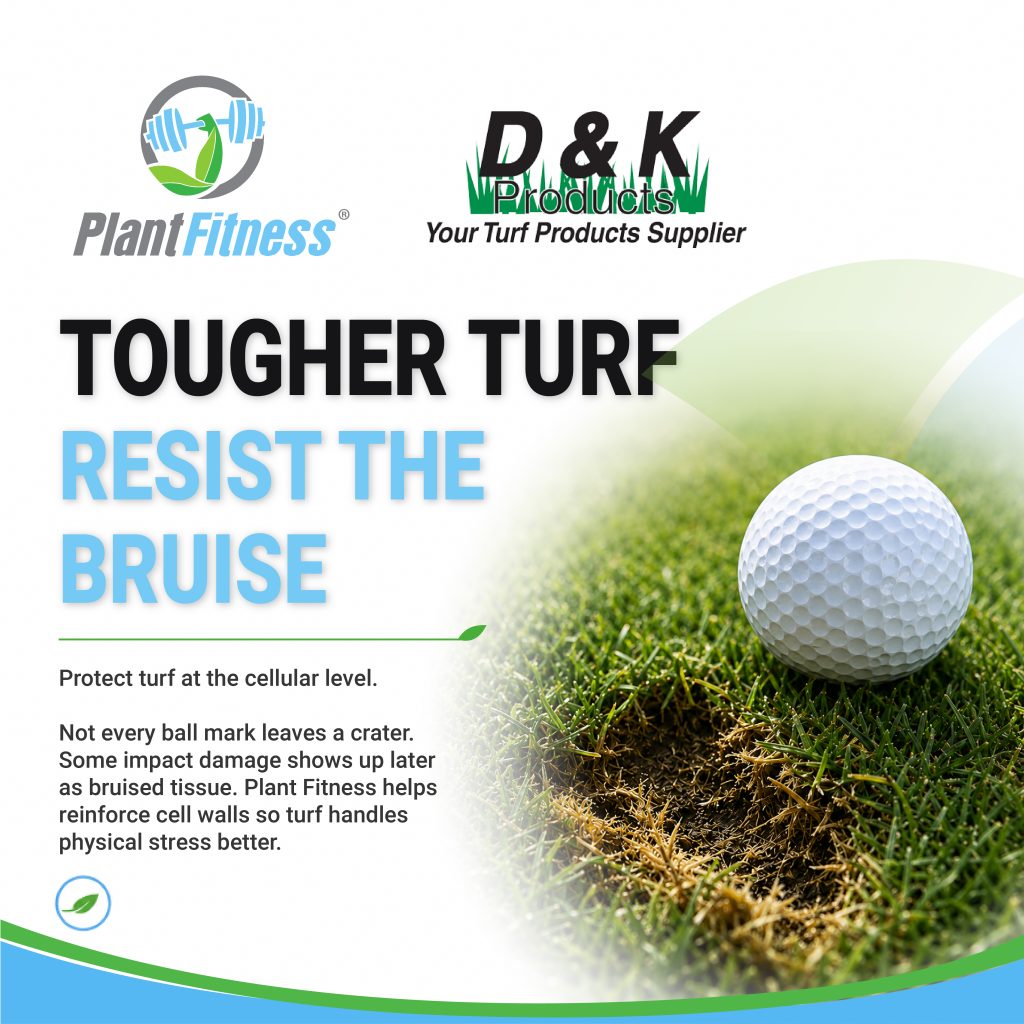
If ball marks are tearing up your greens this season, the answer isn’t another sign asking golfers to repair them. It’s agronomy. Two products, one simple addition to your program:
Run The Core through the season to build firmer greens. Firmer surfaces resist cratering, so the ball does less damage on impact. Add Strength during the stretch when ball marks peak, to build tougher turf that resists the bruising even a firm green can’t fully prevent.
If you’re on the PF3 system, the move is simple: add Strength to PF3 for the high-pressure part of the season. And dry those greens down a little more while you’re at it.
That’s the plan. Here’s why it works.
Why Firmer Greens Take Fewer Hits
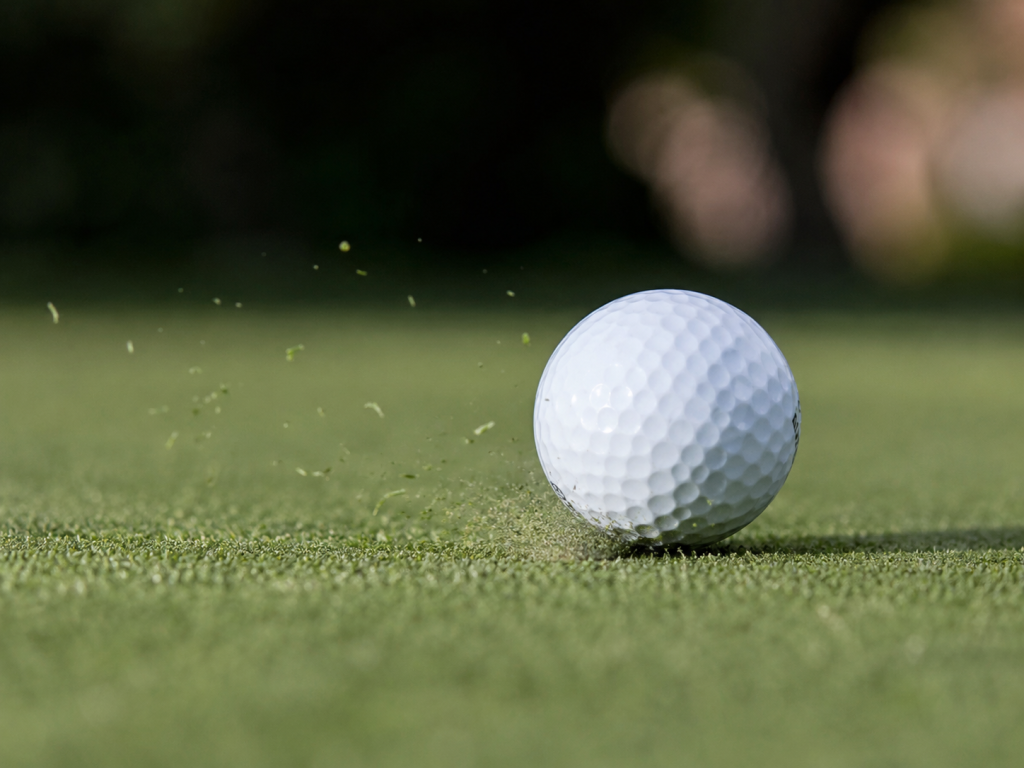
A ball mark damages turf in two ways: the crater everyone sees, and the bruised tissue they don’t. A lofted approach shot drives an indentation into the green, tearing turf from the soil. Unrepaired, it gets scalped at the next mowing; even a repaired mark can leave a dead spot, because pulling the plant from its roots does damage that smoothing won’t undo.
Soft greens make it worse, and the leading cause of soft greens is surface moisture. The timing works against us: summer heat means more water, softer greens, more rounds, and more craters. Superintendents know firmer is better, but there’s a ceiling on how far you can dry down, and that ceiling is the risk of wilt.
That’s what The Core changes. Research from the University of Arkansas shows turf treated with The Core reaches its wilt point at a significantly lower soil moisture level. It conditions turf to use water more efficiently, so you can dry past the old safe point and still hold color and health. Run it all season and you raise your firmness ceiling.
Why Tougher Turf Resists The Bruise
A firm green can still show ball mark damage. The ball crushes leaf tissue on impact, leaving the grey-purple cast of ruptured cells. Worse, this often comes with no crater at all: the golfer sees nothing to fix, and the dead spot surfaces days later.
Preventing it starts at the cellular level. Strength uses a calcium phosphite plus silicon chemistry: the phosphite signals the plant to reinforce its cell walls, and the calcium it delivers builds the calcium pectate that gives those walls their strength. Plant-available silicon then forms a barrier between cells. Picture a brick wall, calcium-rich walls as the bricks, silicon as the mortar. The result resists bruising from ball marks and other physical stress.
One Last Thing About The Golfer Education Debate
Decades of asking golfers to fix their mark hasn’t moved the needle. We could blame the new golfers since Covid, but that misses the point. The damage is agronomic, and so is the fix. Manage the turf, not the golfer.
For more information, contact your local D & K Products rep. To see our current line-up of Plant Fitness products, visit our Product Catalog.